
What happens when a country’s greatest economic liability is invisible? In Ghana, it is measured in lost cognitive potential, diminished labor productivity, and billions of cedis drained from the national purse. Child undernutrition costs Ghana approximately 6.4% of its GDP annually—a figure that translates to GHC4.6 billion, or US$2.6 billion, lost every year to impaired development and increased healthcare burdens. This is the cost of a crisis that experts describe not as a single problem, but as a triple burden: the coexistence of undernutrition, micronutrient deficiencies, and rising obesity rates, all driving a surge in non-communicable diseases.
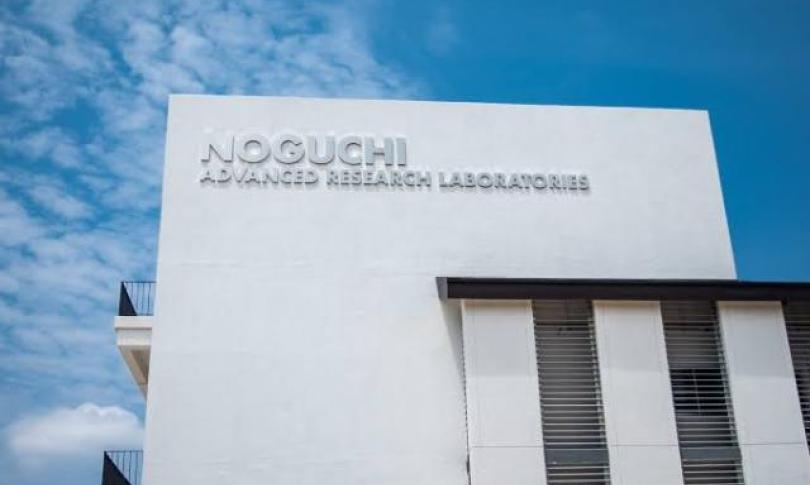
At the heart of the fight against this burden sits the Department of Nutrition, Diet and Metabolic Sciences at the Noguchi Memorial Institute for Medical Research (NMIMR), University of Ghana. Under the leadership of Dr. Gloria Folson, the department is pursuing a strategy that is as much about data and technology as it is about food. “The food system is social. It is cultural. It is spiritual,” says Dr. Sawudatu Zakariah-Akoto, a Research Fellow in the Department. “If we do not understand those dynamics, we are building on sand”.
That understanding begins with measurement. Anaemia remains among the most stubborn challenges. The World Health Organization estimates that 40% of children aged 6–59 months and roughly a third of women of reproductive age are anaemic globally. In Ghana, the picture is starker: UNICEF data indicate that about seven in ten children under five are anaemic, with nearly half of adolescent girls aged 15–19 affected. To tackle this, Dr. Folson leads Nudging for Good, an international collaboration involving the International Food Policy Research Institute, Penn State University, and the FAO, among others. The team validated FRANI, a mobile artificial intelligence application designed to assess dietary intake in adolescent females. Published in the Journal of Nutrition, the study found that FRANI could accurately estimate nutrient intake compared to weighed records, with equivalence demonstrated at a 10% bound for energy intake and a 15% bound for five key micronutrients. “By leveraging AI and gamified technology, we are not just assessing diets—we are actively nudging adolescents towards healthier choices, even without internet access,” Dr. Folson said. “This gives governments real-time diagnostics to strengthen nutrition surveillance”.
The innovation does not stop at the individual level. Dr. Folson has been at the forefront of efforts to optimize school meals. The improved menus added protein-rich foods including eggs and textured soy protein to address critical dietary gaps. A 2025 study used linear programming to design school food baskets that meet newly proposed food and nutrient targets while considering affordability, cultural acceptability, and environmental sustainability. The research revealed that baseline school food baskets were “significantly deficient in energy, protein, Fe, Zn, vitamin A, folate, vitamin B12 and vitamin C” compared to the standards. The optimized baskets met cost and nutrient targets, offering a roadmap for the national school feeding program.
Policy translation is equally central. Dr. Zakariah-Akoto’s work on the Feasibility Testing of National Food-Based Dietary Technical Guidelines fed directly into the launch of Ghana’s first dietary guidelines in February 2023—a policy document designed to guide population-level decisions on healthy eating. Her research uses social and behaviour change communication to address socio-cultural drivers of dietary quality, including a formative study in Northern Ghana on women’s dietary practices and a project to improve diabetes and hypertension screening through faith-based centres.
For Dr. Godfred Egbi, the solution to nutritional anaemia lies in the soil. He investigates a composite food powder formulated from turkey berry, carrot, anchovy, and soybean for its effects on nutritional anaemia and growth among children under five. His earlier work on mixed green leafy vegetable powders showed that Amaranthus cruentus and Solanum macrocarpon measurably improve nutrient intake. “Nutritional anaemia cannot be solved by pills alone,” Dr. Egbi said. “We must look at the power of composite, locally sourced foods to address hidden hunger and improve the growth of our younger citizens”.
But nutrition is not only about what is present in food; it is also about what is not. Dr. Justice Kumi, a Research Fellow and Clinical Pathologist, was recently awarded the 2025/2026 African Research Excellence Fund Seed Fund to lead a study on the effect of aflatoxin exposure on the gut microbiome of Ghanaian children. Aflatoxins, toxic compounds produced by fungi that commonly contaminate cereals, can disrupt the gut microbiome—the community of beneficial bacteria essential for digestion, growth, and overall health. The study will determine the relationship between microbiome composition and IGF-1 levels, a hormone critical for growth. “This Seed Fund is an exciting opportunity to explore how aflatoxin exposure affects the gut microbiome of Ghanaian children,” Dr. Kumi said.

Food safety more broadly remains a critical but often overlooked aspect of nutrition. A recent study led by Dr. Beverly Egyir investigated the microbiological quality and antimicrobial resistance of bacteria in ready-to-eat food, water, and vendor palm swabs in Accra. Published in the International Journal of Food Microbiology, the study found that Enterobacter spp., Citrobacter spp., and Klebsiella pneumoniae were common in food samples, with resistance to multiple antibiotics including amoxicillin-clavulanate and tetracycline. High mean total plate counts and total coliform counts indicated unsafe conditions for consumption in some ready-to-eat foods and water used in vending.
And then there is the diarrhoeal disease link. The Department of Electron Microscopy and Histopathology focuses on enteric viruses such as rotaviruses and noroviruses that cause diarrhoeal diseases—a leading cause of malnutrition in children. The department is a founding member of the African Rotavirus Surveillance Network and hosts the WHO Regional Rotavirus Reference Laboratory for West Africa, one of nine global reference laboratories providing technical support and characterization of rotaviruses for member countries. Repeated infections impair nutrient absorption and contribute to stunting; the department’s research generates evidence that shapes advocacy for rotavirus vaccine introduction in Africa.
Ghana has made notable progress. The country halved underweight and wasting among children between 1993 and 2014, meeting Millennium Development Goal targets for these indicators. However, Ghana did not meet its stunting reduction goals, and only 28.3% of children aged 6–23 months achieve minimum dietary diversity, with stark disparities by wealth and maternal education. As Ghana works toward its 2030 nutrition targets, the work of institutions like NMIMR becomes increasingly critical. The path forward, experts say, requires sustained investment, multi-sectoral coordination, and evidence-based interventions that bridge research, policy, and practice. On World Food Day 2026, under the theme “Innovate Today. Nourish Tomorrow,” the science emerging from Accra offers both a diagnosis and a prescription for a crisis that costs the nation far more than it should.